Landenberg and Henry of the Halden’s Enmity
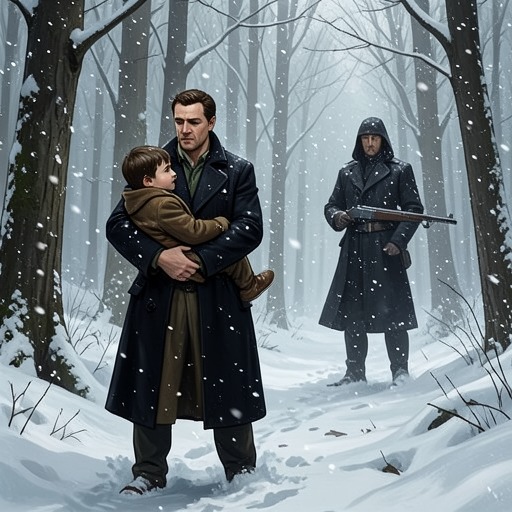
William TellThe enmity between Landenberg and Henry of the Halden begins with Landenberg’s attempt to punish Henry’s son, Arnold of Melchthal, and becomes personal when Henry is made to suffer for his son’s escape. Its defining reversal comes later: Arnold captures Landenberg and brings him before his blinded father, who asks that his attacker be spared.
The Punishment of Henry
Landenberg’s initial grievance was an offence attributed to Arnold. As punishment, he ordered that the young man’s best pair be taken. When Arnold escaped, Landenberg summoned Henry and demanded that he produce his son on the spot. Henry protested, but Landenberg answered the escape by turning his power against the father: he declared that, although Arnold had eluded him, Henry was in his grasp and would feel his vengeance.
Landenberg’s threat was followed by violence. His men threw Henry to the ground and plunged pointed steel into his eyes. The blinding made the conflict more than an effort to punish a fugitive son: Henry himself became its injured, enduring target, while the attack supplied Arnold with a direct cause to pursue Landenberg.
Capture and Merciful Reversal
Across the Bruenig, Arnold pursued Landenberg, overtook and seized him, and dragged him before Henry. Arnold insists that he could not simply allow the man who had blinded his father to go unharmed. The reversal is stark: the fugitive’s son now holds the persecutor at sword-point, with the weapon already poised over Landenberg’s head.
Henry interrupts the vengeance. At the blind man’s entreaty, Arnold spares the life of the attacker who had shown him none. Landenberg swears the Urphede Oath, promising never to return; Arnold says he will keep it, since he has felt their strength. Their enmity thus ends not with Landenberg’s death but with his submission and enforced departure, while Henry’s intervention determines what justice will permit.
A Conflict Recounted in Two Stages
The relationship is disclosed through two separate accounts rather than a single continuous confrontation. Stauffacher first recounts Landenberg’s retaliation and Henry’s blinding; later, across the Bruenig, Arnold describes the pursuit and capture that brought Landenberg back before his father. This shift in speaker and circumstance changes the balance of the story: Henry is first presented as the object of another man’s vengeance, then as the person whose plea determines the captive’s fate. The enmity therefore turns not only on the violence Landenberg inflicts, but on the moment when Henry can influence what Arnold does in response.
The Unspecified Offence
The account leaves the original offence indistinct: Stauffacher says it was committed by Arnold and qualifies the attribution with “it seems,” but gives no further explanation of what Arnold did. That uncertainty keeps attention on the punishment and its escalation. Landenberg first targets the young man’s best pair, then, when Arnold has escaped, demands that Henry produce him and turns the threat of vengeance against the father. The enmity is therefore grounded not in a fully explained dispute between the two men, but in the widening reach of Landenberg’s authority—from punishing a son to injuring the father who cannot deliver him.